Week One | Two Cultures
C.P. Snow's idea of two cultures, as presented in The Two Cultures and the Scientific Revolution, can easily be related to my major and field of study, anthropology. At UCLA, there is a physical divide between these cultures with the campus layout. There is North Campus, which encompasses the social sciences, arts, and humanities on one side and South Campus, including the physical and life sciences, on the other. I, being a member of the North Campus community, understand very well the divide between this community and that of the physical and life sciences of South Campus.
While anthropology is considered part of the humanities and social sciences, there is still plenty of overlap with the life sciences. With the field of anthropology, there are elements of the life sciences in certain subfields. There are medical anthropologists whose goal it is to study diseases of certain areas and how these affected areas cope with these pathologies and how they are classified or thought of differently depending on the culture which may give further insight into their values and ideals. Something such as the picture displayed in the magazine picture below may have also been created by a medical or biological anthropologist.

http://science.sciencemag.org/content/279/5353/992.full
However, there is the idea of a rising "third culture" that is discussed not only in "Third Culture," by Kevin Kelly as well as "Toward a Third Culture: Being in Between." This third culture is described as being between the other two, helping to bridge the gap. The third culture has emerged due to technological advancements that have brought the two cultures together in some areas. In relation to anthropology, there are anthropologists utilizing technology to assist in their scientific studies. Brockman, in an interview with Duncan Graham-Rowe, expresses that the third culture comes from scientists bridging the gap through searching for deeper meanings that were traditionally sought after by literary intellectuals. This third culture is one way, in this field at least, where the divide between the two cultures is bridged. However, we still need to take into account the fact that there is a difference between science and technology, as stated by Stephen Wilson in "Myths and Confusions in Thinking about Art/Science/Technology." While there is still a clear divide between what Snow deemed to be the two cultures, we are moving towards more overlap than there has been in the past.
 C.P. Snow and Two Cultures https://www.bing.com/images/search?view=detailV2&ccid=dJc4gmZ1&id=F195E81C05B75D922D4C924BB0A583B268D8A8B7&q=the+third+culture+of+john+brockman&simid=608043473620307924&selectedindex=8&mode=overlay&first=1&thid=OIP.dJc4gmZ1KE9WROhHhLSAowDsDs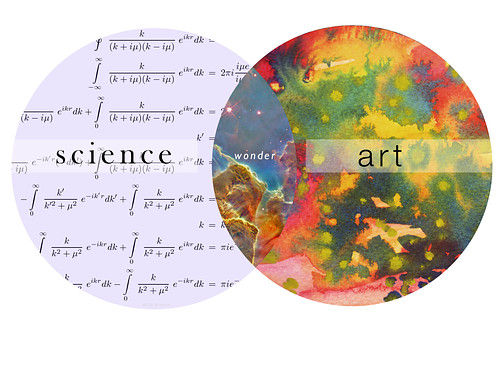
Two Cultures http://blogs.reading.ac.uk/english-at-reading/files/2013/10/Interdisciplinary-Research-into-the-Humanities-and-Science.jpg
Vesna, Victoria. "Toward a Third Culture: Being in Between." Leonardo, Vol. 34, No. 2. (2001), pp. 121-125. Print
Wilson, Stephen. "Myths and Confusions in Thinking about Art/Science/Technology." Stephen Wilson, (2000). Print.
Snow, C.P. The Two Cultures and the Scientific Revolution. New York: Cambridge University Press, 1959. Print.
Kelly, Kevin. "Third Culture." sciencemag.org. American Association for the Advancement of Science. 13 Feb 1998. Web. 7 Apr 2017.
Graham-Rowe, Graham. "John Brockman: Matchmaking with Science and Art." 3 Feb 2011. Print.


I thought your insights about how this specifically applies in anthropology were very interesting, do you believe this would fall under the category of the "third" culture? I also would say I may disagree that the overlap between art and science is new, but rather is a revival.
ReplyDelete