Thursday, June 8, 2017

mercedesbDESMA9

Extra Credit Event Two | Intersex: Beyond the Binary

Today, I attended the symposium held in Royce Hall regarding intersex children and medical interventions after birth. Among the guest speakers was a woman, whom will be the main presenter I discuss in this blog, by the name of Georgiann Davis, a professor at the University of Nevada, Las Vegas. Her perspective, being an intersex person herself, is valuable in our understanding of the intersex community and their opinions on highly debated topics regarding medical practices today. Being a double major in Gender Studies and Anthropology, I found these issues to be relevant to my field of study. 
Displaying IMG_6396.JPG
Flyer provided at the event
One of the main focal points for the discussion was the ethics of medically intervening in the anatomies of intersex children to conform their genitalia to one sex. This brings forth the issue of the gender and sex binary. In this case, we are discussing more the sex binary that is present and influences the doctors of today. The idea of there only being two sexes, male and female, and what those should look like has been normalized to the point where any deviation becomes a trait to be looked down on, causing those with intersex traits to often feel embarrassed or ashamed. Davis, being an intersex person, discussed how she felt shame after discovering the medical records that revealed her intersex status. She advocated for the banning of medical intervention in intersex cases and full disclosure to the individual once they can understand their situation. I completely agreed with everything that Davis had to say during her presentation. I believe that conforming genitalia to the assumed gender based on chromosomal characteristics should be shied away from in today's medical practices. Like Davis, I think that persons with intersex traits should be made full aware of their status and decide on their own if they wish to seek medical attention in any way, shape, or form. Below is the image of "Genderbread Person," which illustrates the spectrum of sex, sexuality, and gender identity. The question of medical interventions in intersex patients is an ongoing debate that should be continually addressed so everyone can come to some sort of understanding.

Displaying IMG_6397.JPG
Panelists (Davis on far right)
Image result for spectrum of gender and sex
"Genderbread" Person 

Works Cited

"Breaking through the Binary: Gender Explained Using Continuums." It's Pronounced Metrosexual. N.p., n.d. Web. 08 June 2017


Wednesday, June 7, 2017

mercedesbDESMA9

Extra Credit Event | Review Session

I attended the review session for suggestions about the final paper as well as the compilation of blogs. This session was very helpful for pinpointing exactly what it is I need to do to prepare for the final materials. Here is a list of the pointers and facts I took note of.

Blog Summary:

- Due June 9 by midnight
- Include pictures
- Blog posts chronologically // events at the end
- Combine blogs into one pdf (may revise any)
- 300-500 word summary // be specific
- Summarize core concepts
- Specificity is key

Final Paper:

- Due June 11 by midnight
- 1500-2000 words
- 5-10 images
- 10 references, 20 in bibliography
- MLA format of references
- Header in upper left corner
- Connect a scientific innovation with to an artist who works with the same subject
- Explain the technology that drives both art and science
- References in order of when they appear in paper
- Connect the topic of your choosing to your major

Sunday, June 4, 2017

mercedesbDESMA9

Week Nine | Space & Art

The pioneering of space in the 1960s sparked a wide range of art to be created. These ranged from cinema and entertainment to art exhibits. A series of television shows and movies were created after the expansion of space exploration. Some of these creations became extremely popular, such as The Jetsons and Star Trek. One of the television shows, titled Lost in Space, was created in 1965, years before Armstrong walked on the moon. This series was an imaginative depiction of what the universe may hold and the adventures of a family exploring the unknown.

Following humans having the technology to more widely explore space, the element of zero gravity inspired many works of art. Kathleen Forde wrote about the variety of exhibits that are organized through this main idea. There is everything from performers portraying weightlessness in video or through public water tanks. The exhibit's main focus centered on the idea of transcendence as well as gravity and zero gravity. The ways that zero gravity is displayed through art is very interesting and ways we would not typically consider being related to weightlessness or zero gravity. It is amazing that space was used to inspire such pieces of art.

The ways that space and the exploration of it has influenced art is truly interesting. Applications of the elements of space to art proves just how versatile art can be.

Dancing on the Ceiling: Art & Zero Gravity at EMPAC
Dancing on the Ceiling piece

Image result for dancing on the ceiling art exhibit
Jill Greenberg Glass Ceiling 
Image result for lost in space
Lost in Space cast


"Dancing on the Ceiling: Art & Zero Gravity Curated by Kathleen Forde : EMPAC Curtis R. Priem Experimental Media and Performing Arts Center : Troy, NY USA." Dancing on the Ceiling: Art & Zero Gravity Curated by Kathleen Forde : EMPAC Curtis R. Priem Experimental Media and Performing Arts Center : Troy, NY USA. N.p., n.d. Web. 03 June 2017.

"Glass Ceiling." ClampArt. N.p., n.d. Web. 02 June 2017.

"Lost in Space (TV Series 1965–1968)." IMDb. IMDb.com, n.d. Web. 02 June 2017. 

Goldberg, Lesley. "'Lost in Space' Reboot Scores 10-Episode Series Order at Netflix." The Hollywood Reporter. N.p., 29 June 2016. Web. 02 June 2017. 

"Dancing on the Ceiling: Art & Zero Gravity at EMPAC." Art & Education. N.p., n.d. Web. 02 June 2017.

mercedesbDESMA9

Event Three | Hammer Museum

The Hammer Museum, located right in Westwood, holds the perfect example of technology's influence on art.

At the entrance of the museum, there was a vibrant exhibit (depicted below). The exhibit is centered around environmental sustainability, displaying the phrases "Water Is Life," "Tierra y Tiberad," and "Mni Wiconi." The vibrant colors, variation in font, and creative placement of the words drew me to this exhibit. I thought that the mix of colors against the black background made the piece especially appealing to the eye and attracted my attention. All three of the phrases are made of cardboard and lit up by LED lights. Combining the factor of lighting technology made the piece all the more intriguing.

Me in front of the "Water is Life" Exhibit 

Description of the project 

The display at the Hammer Museum reminded me of the Museum of Neon Art (MONA). This museum, packed with art lit up in neon colors, is the perfect example of the combination between art and technology. The bright colors draw attention to the work and offer a new take on art. It is an interesting break from flat pieces will duller shades. The way the words and phrases have a three-dimensional quality to them make observing the pieces an exciting experience different from most museum visits. I really enjoyed my visit to Hammer and, after exploring other art incorporating light, would love to go MONA one day as well.

Piece from the MONA (Museum of Neon Art)

"HATS OFF TO HOLLYWOOD." M O N A. N.p., n.d. Web. 03 June 2017.

Friday, May 26, 2017

mercedesbDESMA9

Week Eight | Study Guide for Final

Plan for Preparation

Week Nine:
- go through blogs and revise where needed
- combine into a pdf (with pictures, titles, and a summary of core concepts/ specific likes and dislikes)
- attend office hours once topic is decided for essay

End of Week Nine / Week Ten:
- choose the topic for the essay
- relate chosen topic to Anthropology and/or Gender Studies
- compile list of sources (make sure to find pictures that will add to argument or showcase an idea)
- create outline
- write final draft

Monday, May 22, 2017

mercedesbDESMA9

Week 8 | NanoTech & Art

This week's topic of nanotechnology and its relation to art was very intriguing because I had never before considered any sort of association between the two. However, this week's resources brought new light to the subject.

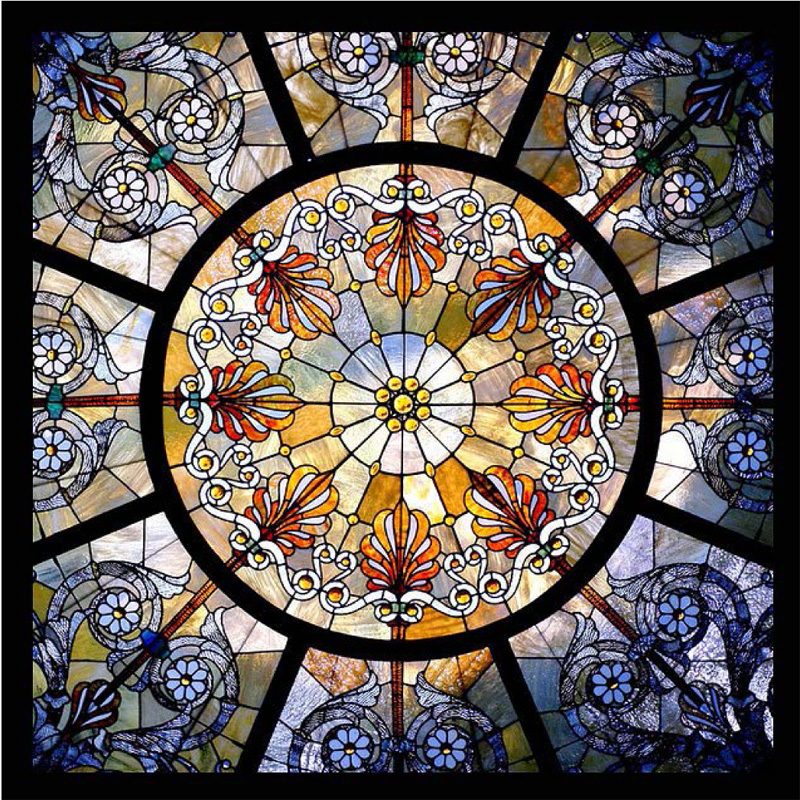
One of the lecture videos with Dr. Gimzewski analyzed an ancient example of the use of nanotechnology. The ancient Romans used nanonized gold in what was called the Lycurgus Cup. In the daylight, the cup appeared to be green. However, when light was shone from the inside of the cup, it looked red. The Lycurgus Cup is one of the oldest examples of people utilizing nanotechnology for artistic purposes. The fact that as long as sixteen thousand years ago people were using nanotechnology is baffling. Nanotechnology being used for art that long ago is very interesting and also highlights the importance of art and aesthetic during these times. Another example includes many stained glass pieces that take on their look because of nanotechnology.

lycurgus-cup-3
Lycurgus Cup
Image result for stained glass
Stained Glass
Nanotechnology was utilized later for more modern, artistic purposes. Christa Sommerer and Laurent Mignonneau created what they called Nano-Scape. Those using this piece would wear a "ring" of sorts and manipulate forces they can feel but cannot see. This device involves electromagnets and nano-particles to achieve the end result. While nano-particles cannot be seen, it is interesting how this project by Sommerer and Mignonneau takes on the possibility of feeling your manipulation of these particles. This also opens up a new world for artists to explore the "invisible layers of our material existence." Nanotechnology is a complicated and complex science that, when applied to art, can have surprising benefits and outcomes.
Christa Sommerer and Laurent Mignonneau, 2002, Nano-Scape: user 06, supported by Volkswagenstiftung, Hannover
Nano-Scape


Uconlineprogram. "Nanotech Jim Pt3." YouTube. YouTube, 21 May 2012. Web. 22 May 2017. 

"Art in the Age of Nanotechnology." Art.Base. N.p., n.d. Web. 22 May 2017. 

Christa Sommerer and Laurent Mignonneau Artworks. N.p., n.d. Web. 22 May 2017. 

"Realtime 96." RealTime Arts - Magazine - Issue 96 - Envisaging the Unseeable. N.p., n.d. Web. 22 May 2017.

"Lycurgus Cup: A Piece of Ancient Roman Nanotechnology." Amusing Planet. N.p., n.d. Web. 22 May 2017. 

"Stained Glass Inc." Stained Glass Inc. N.p., n.d. Web. 22 May 2017. 

Sunday, May 21, 2017

mercedesbDESMA9

Week Seven | NeuroSci & Art

This week's topic of the connection between neuroscience and art has been the most interesting subject to me because of how strange the relationship seems to be. I had never before considered how these two fields could be even remotely related to one another.

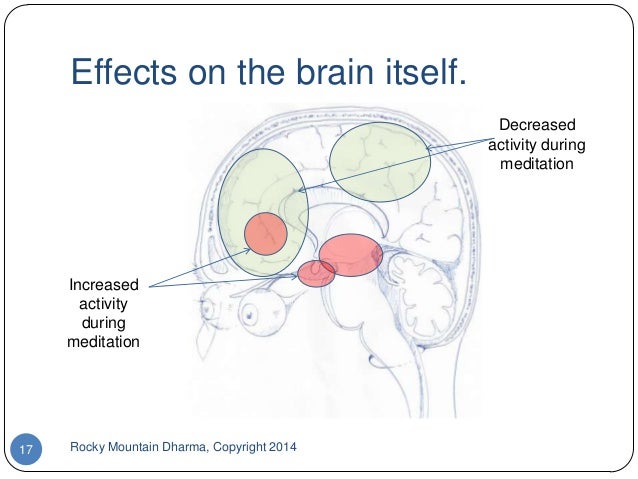
One of the most intriguing relationships involved meditation and its affects on the brain. Eileen Luders, a research fellow at UCLA, conducted research regarding the brains of those that meditate regularly and how they compare to the brains of those that do not. Luders and her research partners relied on MRI technology to make these comparisons. Forty four people were analyzed in this study, half of them having participated in meditation before. At the conclusion of this study, it was found that the regions used for controlling emotions were larger in the participants that had experience with meditation. However, it is uncertain if these variations are caused by meditation practices or if these were characteristics of their brain since birth, possibly gearing them towards meditation in the first place.

This possible connection is very interesting for future implications. If there was, in fact, a direct relationship between meditation and the size of these emotion regulating parts of the brain, meditation could be recommended for certain disorders or conditions. It could be suggested to help with things such as anxiety. In my opinion, this is a very useful application of the practice. While there is, surprisingly, a plethora of ways that neuroscience relates to the artistic realm, meditation was one of the most fascinating to me.


Image result for brain labeled with the thalamus highlighted


Image result for meditation and its effects on the brain

"Harvard Unveils MRI Study Proving Meditation Literally Rebuilds The Brain’s Gray Matter In 8 Weeks." FEELguide. N.p., 19 Nov. 2014. Web. 20 May 2017.

Wheeler, Mark. "How to Build a Bigger Brain." UCLA Newsroom. N.p., 12 May 2009. Web. 18 May 2017.

Learning, Lumen. "The Brain and Spinal Cord." The Brain and Spinal Cord | Introduction to Psychology. N.p., n.d. Web. 21 May 2017.

"The Neuroscience of Mindfulness Meditation." The Chopra Center. N.p., 24 Feb. 2017. Web. 20 May 2017.

Sean Thompson, Director of Treatment at Natural BodyWorks Follow. "Mindfulness and Meditation." LinkedIn SlideShare. N.p., 08 Mar. 2014. Web. 19 May 2017.

mercedesbDESMA9

Extra Credit Event Two | Intersex: Beyond the Binary Today, I attended the symposium held in Royce Hall regarding intersex children and ...