Week Eight | Study Guide for Final
Plan for Preparation
Week Nine:
- go through blogs and revise where needed
- combine into a pdf (with pictures, titles, and a summary of core concepts/ specific likes and dislikes)
- attend office hours once topic is decided for essay
End of Week Nine / Week Ten:
- choose the topic for the essay
- relate chosen topic to Anthropology and/or Gender Studies
- compile list of sources (make sure to find pictures that will add to argument or showcase an idea)
- create outline
- write final draft
Friday, May 26, 2017

Monday, May 22, 2017
mercedesbDESMA9
Week 8 | NanoTech & Art
This week's topic of nanotechnology and its relation to art was very intriguing because I had never before considered any sort of association between the two. However, this week's resources brought new light to the subject.
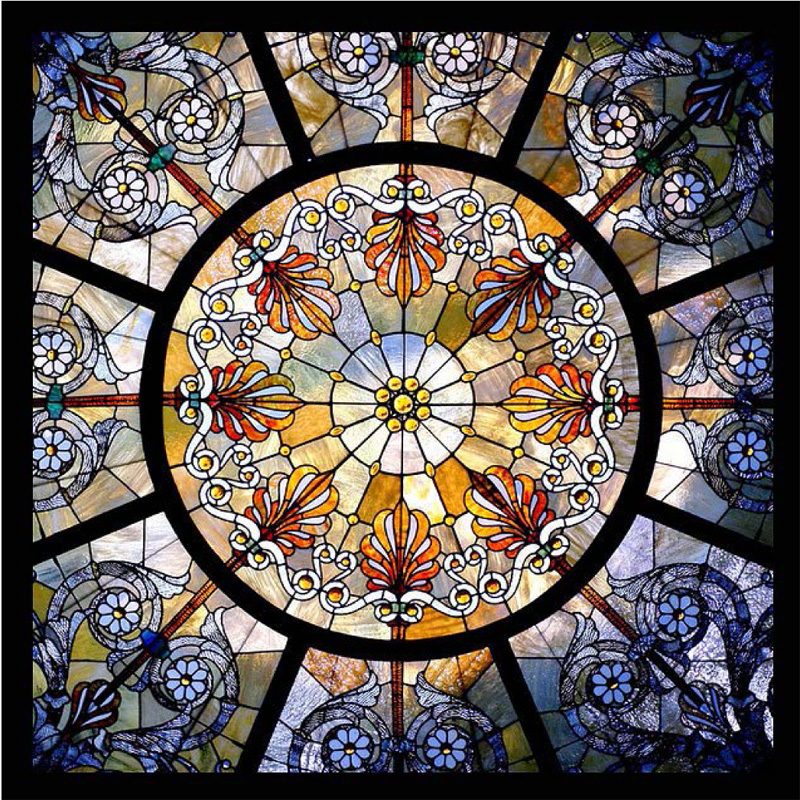
One of the lecture videos with Dr. Gimzewski analyzed an ancient example of the use of nanotechnology. The ancient Romans used nanonized gold in what was called the Lycurgus Cup. In the daylight, the cup appeared to be green. However, when light was shone from the inside of the cup, it looked red. The Lycurgus Cup is one of the oldest examples of people utilizing nanotechnology for artistic purposes. The fact that as long as sixteen thousand years ago people were using nanotechnology is baffling. Nanotechnology being used for art that long ago is very interesting and also highlights the importance of art and aesthetic during these times. Another example includes many stained glass pieces that take on their look because of nanotechnology.
Nanotechnology was utilized later for more modern, artistic purposes. Christa Sommerer and Laurent Mignonneau created what they called Nano-Scape. Those using this piece would wear a "ring" of sorts and manipulate forces they can feel but cannot see. This device involves electromagnets and nano-particles to achieve the end result. While nano-particles cannot be seen, it is interesting how this project by Sommerer and Mignonneau takes on the possibility of feeling your manipulation of these particles. This also opens up a new world for artists to explore the "invisible layers of our material existence." Nanotechnology is a complicated and complex science that, when applied to art, can have surprising benefits and outcomes.
Uconlineprogram. "Nanotech Jim Pt3." YouTube. YouTube, 21 May 2012. Web. 22 May 2017.
"Art in the Age of Nanotechnology." Art.Base. N.p., n.d. Web. 22 May 2017.
Christa Sommerer and Laurent Mignonneau Artworks. N.p., n.d. Web. 22 May 2017.
"Realtime 96." RealTime Arts - Magazine - Issue 96 - Envisaging the Unseeable. N.p., n.d. Web. 22 May 2017.
"Lycurgus Cup: A Piece of Ancient Roman Nanotechnology." Amusing Planet. N.p., n.d. Web. 22 May 2017.
"Stained Glass Inc." Stained Glass Inc. N.p., n.d. Web. 22 May 2017.
This week's topic of nanotechnology and its relation to art was very intriguing because I had never before considered any sort of association between the two. However, this week's resources brought new light to the subject.
One of the lecture videos with Dr. Gimzewski analyzed an ancient example of the use of nanotechnology. The ancient Romans used nanonized gold in what was called the Lycurgus Cup. In the daylight, the cup appeared to be green. However, when light was shone from the inside of the cup, it looked red. The Lycurgus Cup is one of the oldest examples of people utilizing nanotechnology for artistic purposes. The fact that as long as sixteen thousand years ago people were using nanotechnology is baffling. Nanotechnology being used for art that long ago is very interesting and also highlights the importance of art and aesthetic during these times. Another example includes many stained glass pieces that take on their look because of nanotechnology.
 |
| Lycurgus Cup |
 |
| Stained Glass |
 |
| Nano-Scape |
Uconlineprogram. "Nanotech Jim Pt3." YouTube. YouTube, 21 May 2012. Web. 22 May 2017.
"Art in the Age of Nanotechnology." Art.Base. N.p., n.d. Web. 22 May 2017.
Christa Sommerer and Laurent Mignonneau Artworks. N.p., n.d. Web. 22 May 2017.
"Realtime 96." RealTime Arts - Magazine - Issue 96 - Envisaging the Unseeable. N.p., n.d. Web. 22 May 2017.
"Lycurgus Cup: A Piece of Ancient Roman Nanotechnology." Amusing Planet. N.p., n.d. Web. 22 May 2017.
"Stained Glass Inc." Stained Glass Inc. N.p., n.d. Web. 22 May 2017.
Sunday, May 21, 2017
mercedesbDESMA9
Week Seven | NeuroSci & Art
This week's topic of the connection between neuroscience and art has been the most interesting subject to me because of how strange the relationship seems to be. I had never before considered how these two fields could be even remotely related to one another.
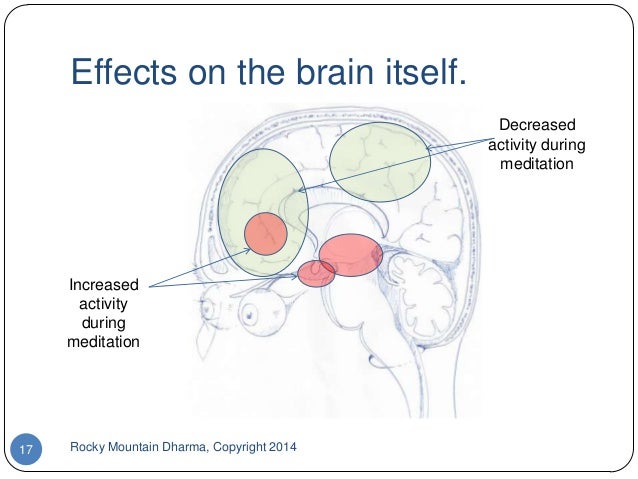
One of the most intriguing relationships involved meditation and its affects on the brain. Eileen Luders, a research fellow at UCLA, conducted research regarding the brains of those that meditate regularly and how they compare to the brains of those that do not. Luders and her research partners relied on MRI technology to make these comparisons. Forty four people were analyzed in this study, half of them having participated in meditation before. At the conclusion of this study, it was found that the regions used for controlling emotions were larger in the participants that had experience with meditation. However, it is uncertain if these variations are caused by meditation practices or if these were characteristics of their brain since birth, possibly gearing them towards meditation in the first place.
This possible connection is very interesting for future implications. If there was, in fact, a direct relationship between meditation and the size of these emotion regulating parts of the brain, meditation could be recommended for certain disorders or conditions. It could be suggested to help with things such as anxiety. In my opinion, this is a very useful application of the practice. While there is, surprisingly, a plethora of ways that neuroscience relates to the artistic realm, meditation was one of the most fascinating to me.


"Harvard Unveils MRI Study Proving Meditation Literally Rebuilds The Brain’s Gray Matter In 8 Weeks." FEELguide. N.p., 19 Nov. 2014. Web. 20 May 2017.
Wheeler, Mark. "How to Build a Bigger Brain." UCLA Newsroom. N.p., 12 May 2009. Web. 18 May 2017.
Learning, Lumen. "The Brain and Spinal Cord." The Brain and Spinal Cord | Introduction to Psychology. N.p., n.d. Web. 21 May 2017.
"The Neuroscience of Mindfulness Meditation." The Chopra Center. N.p., 24 Feb. 2017. Web. 20 May 2017.
Sean Thompson, Director of Treatment at Natural BodyWorks Follow. "Mindfulness and Meditation." LinkedIn SlideShare. N.p., 08 Mar. 2014. Web. 19 May 2017.
This week's topic of the connection between neuroscience and art has been the most interesting subject to me because of how strange the relationship seems to be. I had never before considered how these two fields could be even remotely related to one another.
One of the most intriguing relationships involved meditation and its affects on the brain. Eileen Luders, a research fellow at UCLA, conducted research regarding the brains of those that meditate regularly and how they compare to the brains of those that do not. Luders and her research partners relied on MRI technology to make these comparisons. Forty four people were analyzed in this study, half of them having participated in meditation before. At the conclusion of this study, it was found that the regions used for controlling emotions were larger in the participants that had experience with meditation. However, it is uncertain if these variations are caused by meditation practices or if these were characteristics of their brain since birth, possibly gearing them towards meditation in the first place.
This possible connection is very interesting for future implications. If there was, in fact, a direct relationship between meditation and the size of these emotion regulating parts of the brain, meditation could be recommended for certain disorders or conditions. It could be suggested to help with things such as anxiety. In my opinion, this is a very useful application of the practice. While there is, surprisingly, a plethora of ways that neuroscience relates to the artistic realm, meditation was one of the most fascinating to me.
"Harvard Unveils MRI Study Proving Meditation Literally Rebuilds The Brain’s Gray Matter In 8 Weeks." FEELguide. N.p., 19 Nov. 2014. Web. 20 May 2017.
Wheeler, Mark. "How to Build a Bigger Brain." UCLA Newsroom. N.p., 12 May 2009. Web. 18 May 2017.
Learning, Lumen. "The Brain and Spinal Cord." The Brain and Spinal Cord | Introduction to Psychology. N.p., n.d. Web. 21 May 2017.
"The Neuroscience of Mindfulness Meditation." The Chopra Center. N.p., 24 Feb. 2017. Web. 20 May 2017.
Sean Thompson, Director of Treatment at Natural BodyWorks Follow. "Mindfulness and Meditation." LinkedIn SlideShare. N.p., 08 Mar. 2014. Web. 19 May 2017.
Sunday, May 14, 2017
mercedesbDESMA9
Event Two | Fowler Museum
I visited the Fowler Museum on campus to discover ways they may connect art and technology in their exhibits. After taking a walk through all of their exhibits, it was evident that technology is definitely one of the ways that art is expressed at the museum. For example, as soon as you first step into the museum's main hallway, there is a monitor displaying a movement piece. It continuously plays a loop of a man dancing. Something similar is playing on a few other monitors as well. For this example, the use of technology was essential for putting this form of art on display. I thought that this part of the exhibit was very refreshing because it was not a still piece of art. Whenever I go to museums with other people, often someone loses interest standing and staring at still art. With pieces like these, it grabs the attention of more people.

In another section of the museum, there was another example of how technology assisted in the viewing of the art. There was a small room lined with different headdresses that viewers could take a look at. However, next to the Joli headdress, there was an iPad sized device attached to the wall. As explained in the description below, the monitor was used to give the viewer an interactive way to look at the headdresses and to assess them from all angles without touching the work or dissecting it. I thought this part of the exhibit was the most interesting because of its interactive feature. I thoroughly enjoyed being able to see the headdress from any angle I wished and I could control it through the touchscreen, something that most of us are very familiar with. In my opinion, incorporating our modern technology as a way of looking at older art brings new interest to the pieces. Overall the visit to the museum contained more technology with the art than I had originally expected. Each of the exhibits I looked at were interesting and even more so with the addition of their technological additions or aids.

I visited the Fowler Museum on campus to discover ways they may connect art and technology in their exhibits. After taking a walk through all of their exhibits, it was evident that technology is definitely one of the ways that art is expressed at the museum. For example, as soon as you first step into the museum's main hallway, there is a monitor displaying a movement piece. It continuously plays a loop of a man dancing. Something similar is playing on a few other monitors as well. For this example, the use of technology was essential for putting this form of art on display. I thought that this part of the exhibit was very refreshing because it was not a still piece of art. Whenever I go to museums with other people, often someone loses interest standing and staring at still art. With pieces like these, it grabs the attention of more people.
| One of the monitors displaying the movement piece |
In another section of the museum, there was another example of how technology assisted in the viewing of the art. There was a small room lined with different headdresses that viewers could take a look at. However, next to the Joli headdress, there was an iPad sized device attached to the wall. As explained in the description below, the monitor was used to give the viewer an interactive way to look at the headdresses and to assess them from all angles without touching the work or dissecting it. I thought this part of the exhibit was the most interesting because of its interactive feature. I thoroughly enjoyed being able to see the headdress from any angle I wished and I could control it through the touchscreen, something that most of us are very familiar with. In my opinion, incorporating our modern technology as a way of looking at older art brings new interest to the pieces. Overall the visit to the museum contained more technology with the art than I had originally expected. Each of the exhibits I looked at were interesting and even more so with the addition of their technological additions or aids.
| Joli headdress monitor |
| Myself in front of one of the monitors |
Thursday, May 11, 2017
mercedesbDESMA9
Week Six | Biotech & Art
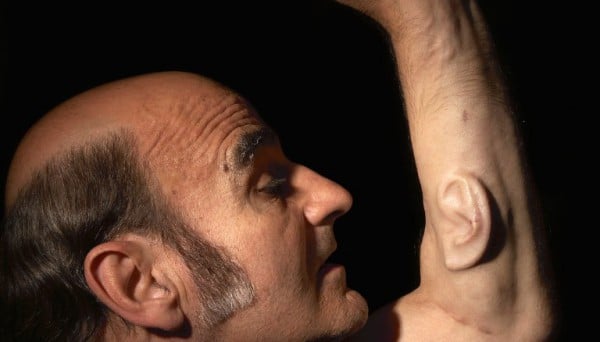
Stelarc, similar to the steps taken by Orlan, conducted a project that modified his body. His project, titled Extra Ear, involved forming an ear on his left arm that was capable of transmitting information. This form of body modification demonstrates how art can come in the of altering one's body, as Orlan and others have done before. While the concept behind his work is very intriguing, the actual modifying seems slightly extreme to me. However, it is admirable how far these artists will go for their work.
Eduardo Kac was also a figure heavily involved in biotechnology and its relation to the artistic realm. Kac conducted experiments with fluorescent genes. In 2000, Kac presented "Alba," the glowing rabbit. This rabbit was genetically modified with the fluorescent gene. This sparked other scientists to perform the same procedure but with fish. Fluorescent genes were injected into fish with the motive of marketing them as glowing fish and selling them in stores. However, those involved in genetically modifying these fish received a large amount of backlash. There were those questioning whether it is appropriate, or rather ethical, to utilize living creatures for artistic endeavors. In my opinion, I do not think it is ethical to genetically modify animals for purposes that are not advancing science towards cures or information that would greatly benefit the population. With the case of the fish for marketable purposes, I do not think that was ethical of the scientists that modified them.

Orlan, who has been mentioned in this course before with her medical procedures relating to her art. She utilized the technology of medical professional to propel her artistic visions. The connection between biotechnology and art is illustrated through Orlan's work. This is far different from the GFP being injected in the fish and rabbits because Orlan made the decision herself to go through with these procedures. Overall, looking at all of the various ways biotechnology and art are related and can be connected is very interesting.

Cascone, Sarah. "Artist Grows Third Ear." Artnet News. Artnet News, 13 Aug. 2015. Web. 09 May 2017.
Green Fluorescent Protein - Cool Uses - Alba. N.p., n.d. Web. 09 May 2017.
Levy, Ellen K. "Ellen_Levy_BioArt.pdf - 1 Defining Life Artists Challenge..." Defining Life: Artists Challenge Conventional Classifications Ellen K Levy. N.p., n.d. Web. 09 May 2017.
GFP BUNNY. N.p., n.d. Web. 09 May 2017.
"Contoversial Artist Orlan The Reincarnation of Saint-Orlan." Creative Mapping. N.p., 19 Nov. 2014. Web. 10 May 2017.
Stelarc, similar to the steps taken by Orlan, conducted a project that modified his body. His project, titled Extra Ear, involved forming an ear on his left arm that was capable of transmitting information. This form of body modification demonstrates how art can come in the of altering one's body, as Orlan and others have done before. While the concept behind his work is very intriguing, the actual modifying seems slightly extreme to me. However, it is admirable how far these artists will go for their work.
Eduardo Kac was also a figure heavily involved in biotechnology and its relation to the artistic realm. Kac conducted experiments with fluorescent genes. In 2000, Kac presented "Alba," the glowing rabbit. This rabbit was genetically modified with the fluorescent gene. This sparked other scientists to perform the same procedure but with fish. Fluorescent genes were injected into fish with the motive of marketing them as glowing fish and selling them in stores. However, those involved in genetically modifying these fish received a large amount of backlash. There were those questioning whether it is appropriate, or rather ethical, to utilize living creatures for artistic endeavors. In my opinion, I do not think it is ethical to genetically modify animals for purposes that are not advancing science towards cures or information that would greatly benefit the population. With the case of the fish for marketable purposes, I do not think that was ethical of the scientists that modified them.

Orlan, who has been mentioned in this course before with her medical procedures relating to her art. She utilized the technology of medical professional to propel her artistic visions. The connection between biotechnology and art is illustrated through Orlan's work. This is far different from the GFP being injected in the fish and rabbits because Orlan made the decision herself to go through with these procedures. Overall, looking at all of the various ways biotechnology and art are related and can be connected is very interesting.
Cascone, Sarah. "Artist Grows Third Ear." Artnet News. Artnet News, 13 Aug. 2015. Web. 09 May 2017.
Green Fluorescent Protein - Cool Uses - Alba. N.p., n.d. Web. 09 May 2017.
Levy, Ellen K. "Ellen_Levy_BioArt.pdf - 1 Defining Life Artists Challenge..." Defining Life: Artists Challenge Conventional Classifications Ellen K Levy. N.p., n.d. Web. 09 May 2017.
GFP BUNNY. N.p., n.d. Web. 09 May 2017.
"Contoversial Artist Orlan The Reincarnation of Saint-Orlan." Creative Mapping. N.p., 19 Nov. 2014. Web. 10 May 2017.
Sunday, May 7, 2017
Subscribe to:
Posts (Atom)
mercedesbDESMA9
Extra Credit Event Two | Intersex: Beyond the Binary Today, I attended the symposium held in Royce Hall regarding intersex children and ...
-
Week One | Two Cultures C.P. Snow's idea of two cultures, as presented in The Two Cultures and the Scientific Revolution , can easily...
-
Week Four | MedTech & Art The connections between medical technology and art is very relevant to modern day actions and procedures. ...
-
Event Three | Hammer Museum The Hammer Museum, located right in Westwood, holds the perfect example of technology's influence on art. ...


