Weintraub's lecture titled, "Eco Materialism and Contemporary Art," covered a wide range of artists and styles. The connection between artists and the subject matter of their work was a prominent theme in Weintraub's lecture. This theme also tied in to some of the main concepts in the course, such as the relationship between art and science. James Bridle's work is interesting discuss within the context of distance between artists and their work. Bridle's work, "The Drone's Eye View," is centered around photographing the sites of drone strikes, or as close to the sites as he could estimate. His work is particularly interesting because of how detached he seems to be from his projects. With the case of Bridle, the images he shared were not created by him but automatically composed by the technology used. This is one level of separation along with the fact that Bridle did not visit the sites that he was showcasing. Below are a few samples of the photographs he shared of drone strike locations. Bridle's work brings up one of the main questions embedded in the course of the relationship between art, science, and technology.

Another example of an artist that is questioned for his relationship with his art is Kazimir Malevich. Malevich's work was inspired by the views seen from the perspective of people in an airplane. Flight was a revolutionary action at this time. This altered perspective is known as suprematism. With Malevich's piece below, there is the sense of floating that humans had never had the opportunity to experience before flight became possible. With Malevich, there is a question of a disconnect because it is drastically different from our known reality. There is not a sense of texture, distance, or horizon, making it difficult for the viewers to connect to the work.
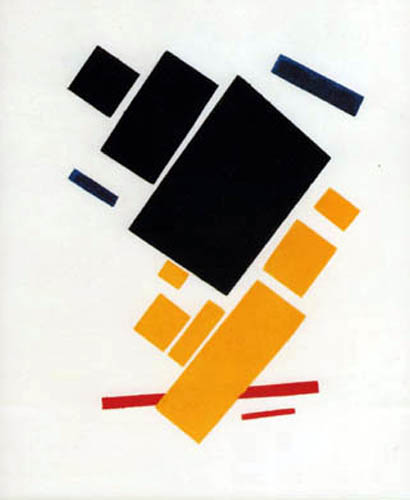
"Airplane in Flight"
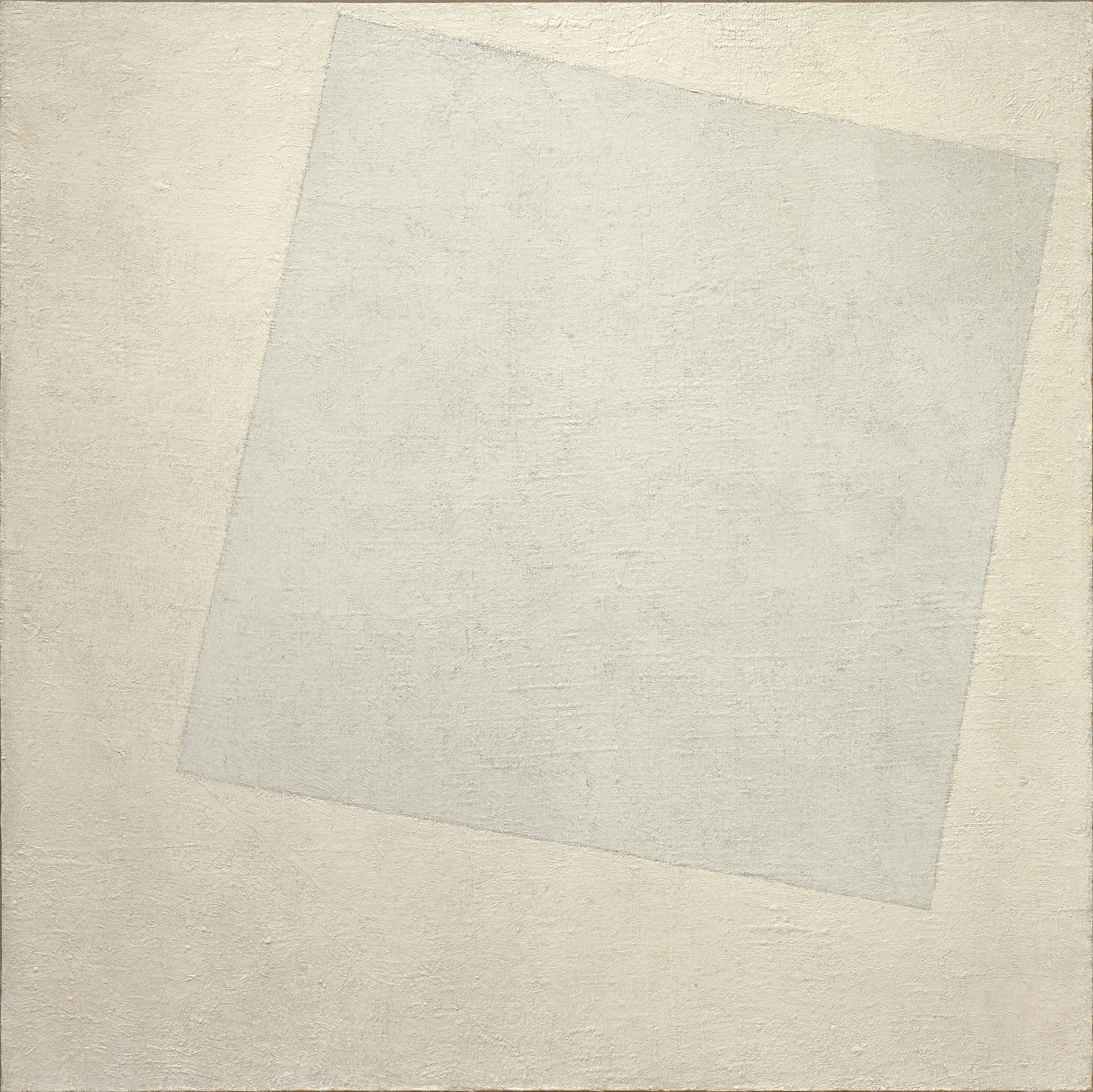
"White on White
Linda Weintraub is very interactive with her environment and, therefore, her art. Her interaction with nature is what she calls a give and take relationship. For example, she receives sap from her trees and, in return, she scatters the ashes from the wood around the tree as a fertilizer. She also relies on certain resources, such as the wood she gathers for heat as well as the vegetables she gathers for food. Overall, her lecture was very insightful and encouraged me to consider how close an artist is to their work and how that may play a role in their views. I would definitely recommend this event because not only did it tie in to concepts of the class, it also was very interesting to learn more about Weintraub's lifestyle and how I can implement some elements into my own life.

Weintraub's animals
"Kazimir Malevich. Suprematist Composition: White on White. 1918 | MoMA." The Museum of Modern Art. N.p., n.d. Web. 19 Apr. 2017.
"Booktwo.org." Dronestagram: The Drone’s-Eye View. N.p., n.d. Web. 19 Apr. 2017.
"ONLINE COURSE LOGIN." Course Login | Online Course Login. N.p., n.d. Web. 22 Apr. 2017.
"Airplane in Flight." Art Printing in Tradition. N.p., n.d. Web. 23 Apr. 2017.


No comments:
Post a Comment